Local guide
Kayaking Olalla Bay
The bay looks good from the deck. It looks better from a kayak.
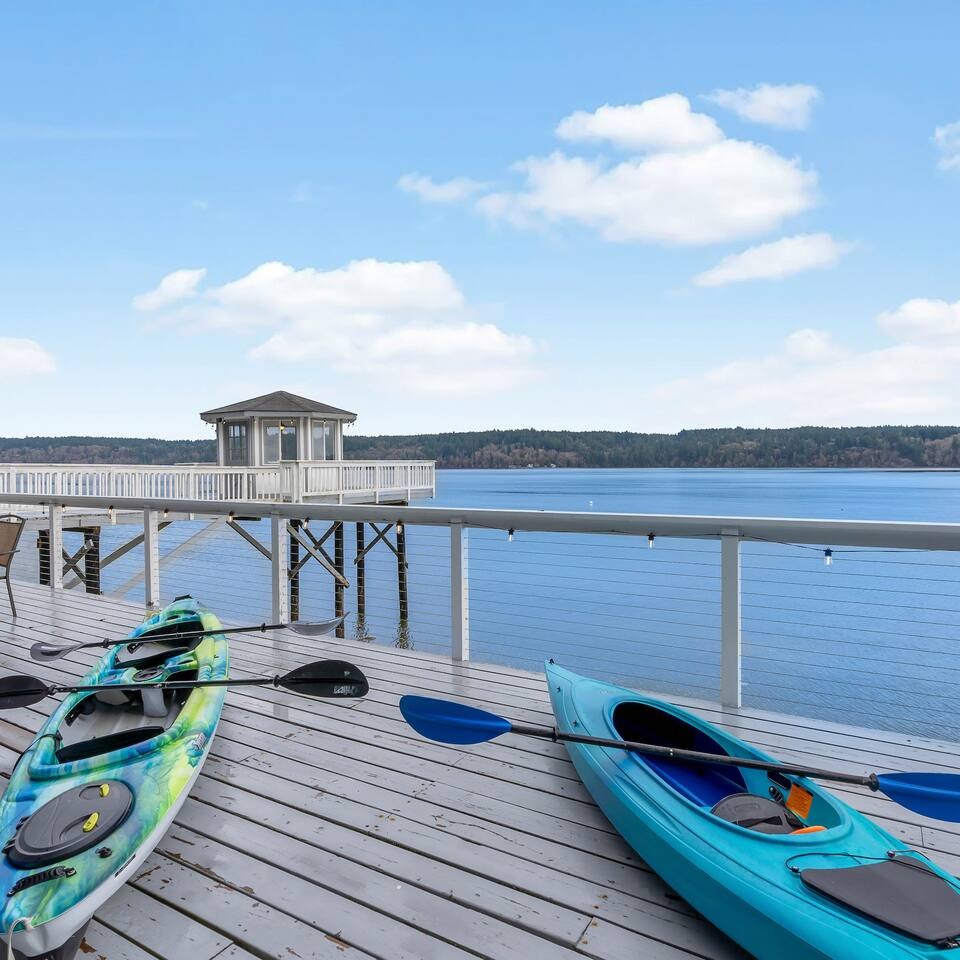
The house comes with four kayaks and life vests, and you launch straight off the private beach. No driving to a put-in, no rental counter, no hourly rate. Walk through the gate, carry a boat to the water, and go. Most mornings the bay is flat glass, and you will have it mostly to yourself.
Launching from the house
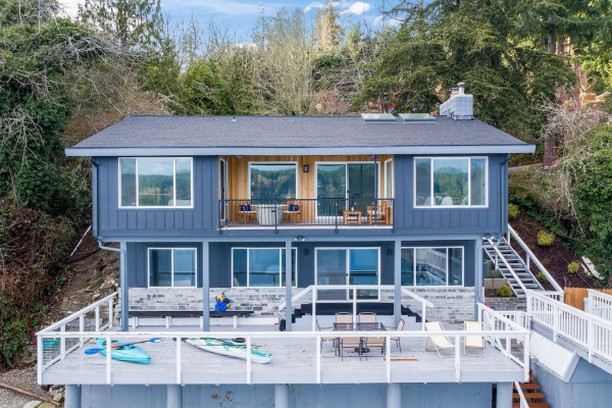
There is a private gate from the property down to the beach, and that is your launch. The kayaks live up by the house. Before anyone gets in a boat, sign the release form in the welcome binder and put on a life vest. The house rule is simple: no vest, no kayak. It is not negotiable, and it should not be.
Where to paddle
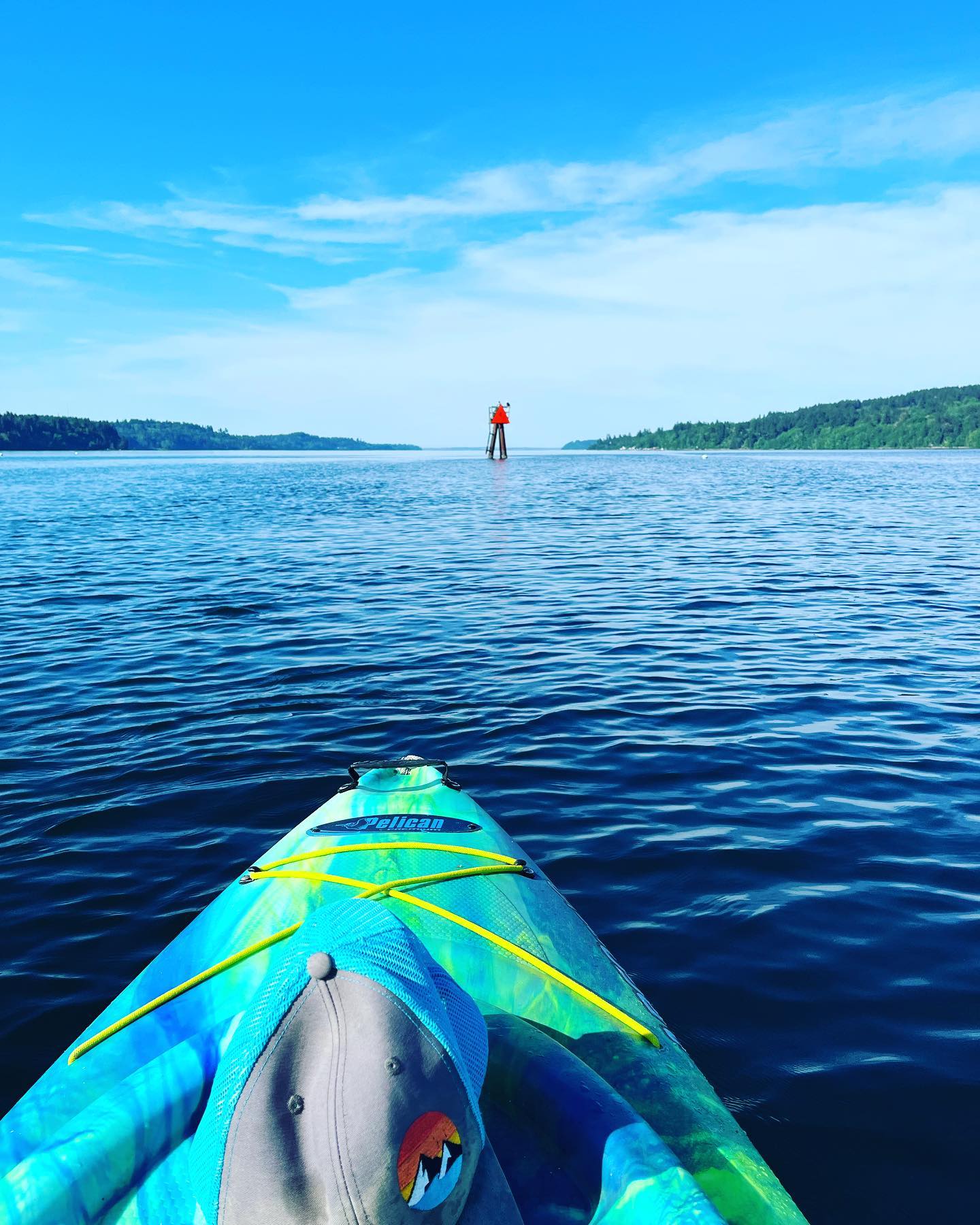
Olalla Bay itself is the easy choice. It is sheltered, the water stays calm, and you can hug the shoreline in either direction for an hour without ever feeling far from the house. This is where you want to be if you are new to this.
If you want more, Colvos Passage runs between the Kitsap side and Vashon Island. The current in the passage usually runs north on a flooding tide, so check the tide before you commit. Ride it one way and work the eddies near shore coming back, or just stay in the bay. Nobody will think less of you. The bay is the good part.
Two more options within a short drive: Anderson Point Park, about eight minutes away, has beach access and a different stretch of shoreline. On the Vashon side, Lisabeula has a hand-carry launch if you ever want to start from across the passage.
What you will see
Harbor seals. They will watch you from the rocks and slide into the water if you get close, which you should not. River otters work the shoreline in the early morning. Bald eagles are overhead most days, close to guaranteed. Porpoises roll through the passage. And sometimes, orcas. Guests have reported all of it from the deck. From a kayak you are at eye level with it.
Do not paddle toward the seals, and give orcas a wide berth if you are lucky enough to see them. Watch from a distance. They were here first.
When to go
Morning. The wind on the Sound almost always builds in the afternoon, and the bay is at its calmest before 10 or 11. Check the tide as well. The hour around the tide change, slack water, is the easiest paddling. Mid-ebb or mid-flood moves real water in the passage. If you stay in the bay you can mostly ignore all of this, but it is good to know.
The practical stuff
- Four kayaks, first come first served. If the house is full, take turns. An hour each is plenty.
- Life vests live with the kayaks. Wear one every time. Every time.
- Sign the release form before your first paddle. It is in the welcome binder.
- Bring sunscreen, water, and a dry bag for your phone. You will want the photos.
- Hose the sand off the boats and put everything back where you found it.
- The water is cold year round. In summer it is refreshing. In winter, wear a wetsuit or stay on shore with coffee.
Questions people ask
- Do I need kayaking experience?
- No. The bay is sheltered and calm, especially in the morning. If you can get in and out of the boat at the beach, you can paddle the bay.
- Are the kayaks really free?
- Yes. Four kayaks and life vests come with the house. That is the whole point.
- What about kids?
- Kids do great in the bay with an adult in another kayak. Everyone wears a life vest, no exceptions.
- Can I bring my own kayak or paddleboard?
- Sure. Launch from the beach through the gate like everyone else.