Local guide
Watching for Orcas
Every guest asks. Here is the honest answer.
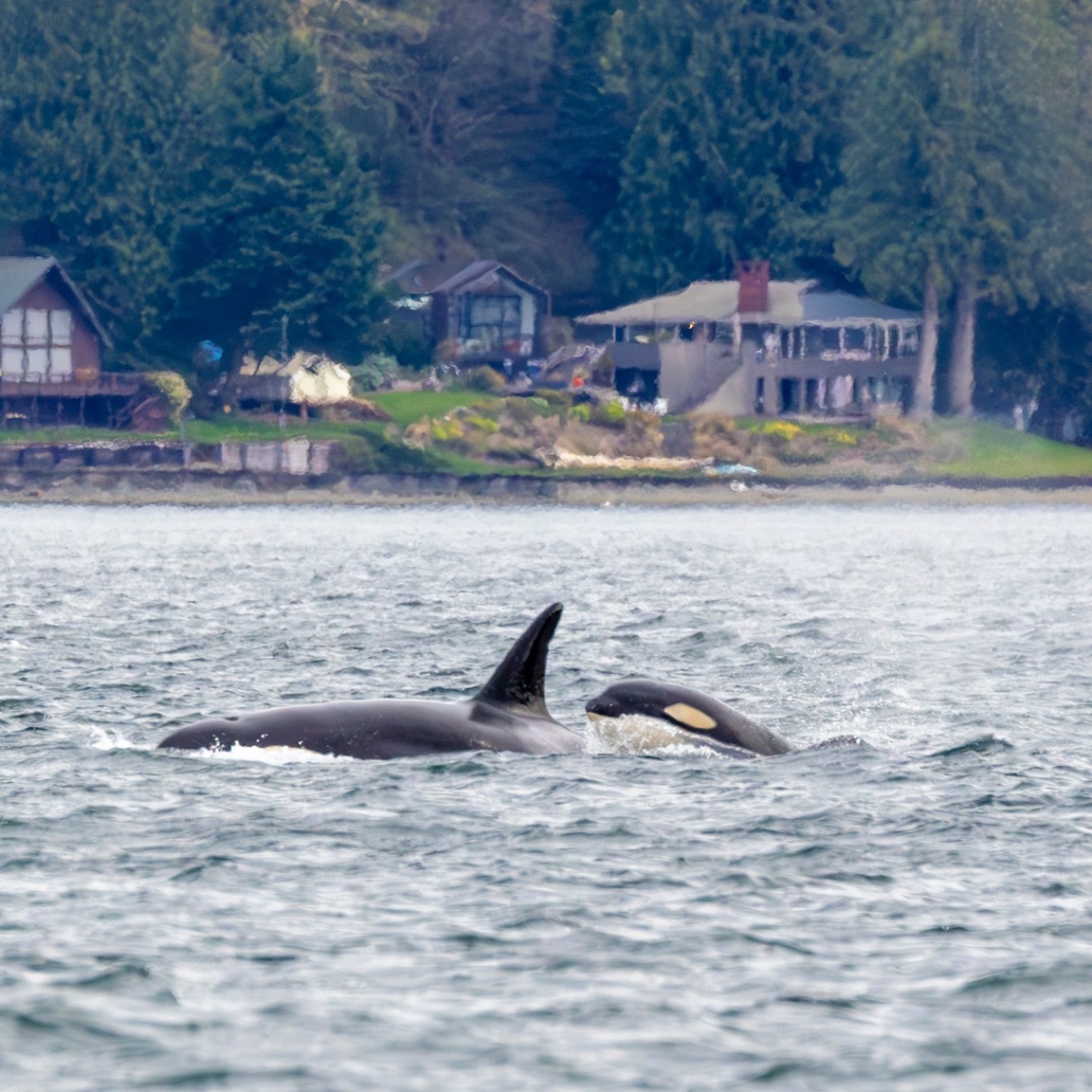
Yes, orcas come through. Guests have watched them from the deck and the dock gazebo, fins up in the passage, close enough to hear the breath. No one can promise you orcas on your weekend. But this is one of the places in Puget Sound where it actually happens, and it happens often enough that you should spend your mornings looking.
Which orcas come through
Two kinds of orcas swim these waters, and it matters which one you are looking at. Bigg's orcas, also called transients, hunt marine mammals: seals, porpoises, sea lions. They travel in small groups, they hunt quietly, and they are the orcas you are most likely to see from the house. Over the last decade they have made Puget Sound a regular part of their range, and in recent years they have shown up in the central Sound through fall and winter about as often as anywhere.
The Southern Residents, J, K, and L pods, are the famous ones: the endangered fish-eating families. They pass through less predictably. When they come it is an event. The sighting networks lit up in September 2026 when J pod came into the inland Sound twice in one month.
When to watch
There is no orca season with a start date. Bigg's can appear in any month, and fall and winter have been the strongest stretch in the central Sound in recent years. Mornings are the best time to spot them: calm water, low glare, and you are already on the deck with coffee. Watch for the seals, too. When the seals suddenly vanish from the rocks, something with teeth is nearby.
The seals, otters, and eagles are close to guaranteed. Orcas are the bonus that ruins every other vacation.
Watching from the house
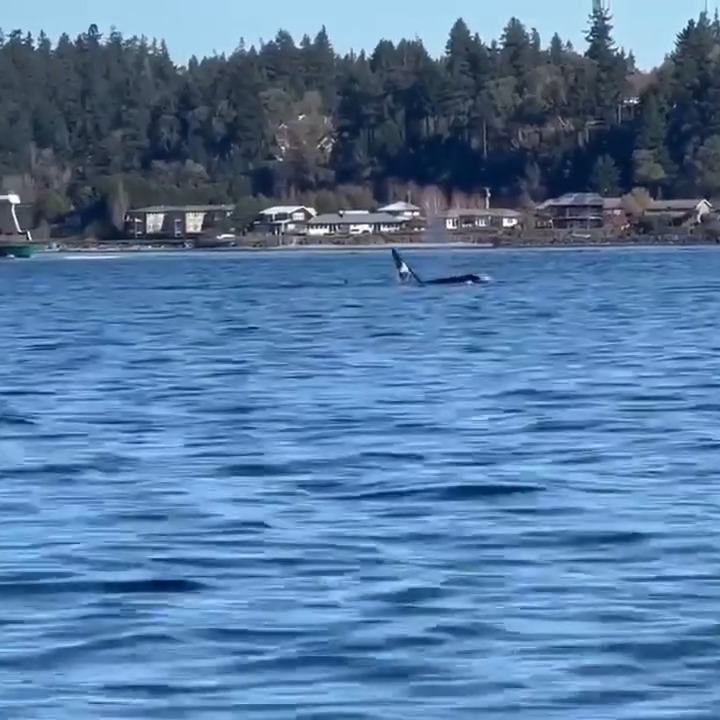
The deck and the dock gazebo face Colvos Passage, which is the orcas' highway between the south Sound and the rest of Puget Sound. You do not need to go anywhere. Bring binoculars, or at least know where your phone's zoom is, and settle in. The first sign is usually a tall dorsal fin or a blow hanging over flat water.
Before your coffee, check the Orca Network sightings page. If whales were reported in the south Sound yesterday, spend the morning on the deck. That is the whole strategy, and it works.
The rules on the water
Washington takes this seriously, and so should you. Since 2025, state law requires vessels to stay 1,000 yards, about half a mile, from Southern Resident killer whales, slow to 7 knots within half a mile of them, and cut the engine if one surfaces within 400 yards. For Bigg's and other transient orcas: 200 yards minimum, and stay 400 yards out of their path.
If you are in one of the house kayaks and orcas appear, stop paddling, group up, stay out of their path, and enjoy the best thing that will happen to you all year. Do not paddle toward them. If you cannot tell which kind they are, treat them as endangered and give them the full 1,000 yards. That is the rule, and it is a good one. Watch for the Whale Warning Flag on other boats: it means whales are nearby, so slow down and give them room.
Taking a tour
If you want a boat with a naturalist and a hydrophone, the established whale watch operators run out of Edmonds and the San Juan Islands. It is a day trip from the house, and a good one. But honestly, some of the best sightings our guests report happened from the dock gazebo, coffee in hand, having gone nowhere at all.
Questions people ask
- Will we see orcas?
- No one can promise them. Bigg's orcas travel the passage regularly and guests have watched them from the deck. The seals, otters, and eagles are close to guaranteed. Orcas are the bonus.
- What is the difference between Bigg's and Southern Residents?
- Bigg's, or transients, hunt marine mammals and travel in small quiet groups. They are the ones you will most likely see. The Southern Residents are the endangered fish-eating J, K, and L pods, and they pass through less predictably.
- When is the best time of year?
- Bigg's can show up in any month. Fall and winter have been the strongest stretch in the central Sound in recent years. Watch in the morning, when the water is calm.
- What if orcas come while we are kayaking?
- Stop paddling, group up, stay out of their path, and enjoy it. Do not paddle toward them. If you are unsure which kind they are, give them the full 1,000 yards.
- Can we take a whale watching tour nearby?
- The established operators run from Edmonds and the San Juans, a day trip from the house. Or stay put: the dock gazebo has produced plenty of sightings on its own.
Come watch the passage
The orcas come to you. All that is missing is a morning on the deck.
Book direct